Monday, 19 September 2022

Plastics conundrum


The new ban on ‘single use plastic’ is on. The government has defined ‘single-use’ plastic as something that is used once and then disposed of or recycled.

The government has listed 21 items that need to be phased out and they included plates made of plastic, cups made of plastic, earbuds with plastic sticks, glasses made of plastic; wrapping or packaging films around sweet boxes, cigarette packets among others.

While going through the extensive lists, it made me sit up and wonder as to how plastics have quietly seeped into our lives and become so well-entrenched that we can’t think of a life without them.

The durability and convenience the plastics offer have proved to be a Faustian bargain in the long run. Once we discard plastic items, they are not biodegradable and usually go to a landfill where it is buried or it gets into the water and finds its way into the ocean. They later break down into tiny particles and release toxic chemicals. These chemicals find their way into our food and water supply and are found in our bloodstream, causing various ailments including cancer, infertility, birth defects and impaired immunity.

I was lucky enough to have a glimpse of what a pre-plastic or a less-plastic era looked like. We had to carry a glass bottle or steel container while going to buy milk, a cloth bag was integral to shopping at grocery and vegetable stores, and every shop stocked discarded newspaper to wrap and pack the goods.

Some shopkeepers used the packets made out of newspapers, while others used the newspaper sheets to wrap the commodities which were tied up using a thread – of thick cotton or gunny bag material. The speed and adeptness with which those veteran shopkeepers used to wrap and tie ½ kg dal or sugar in a paper sheet and tie it up with a thread used to make me wonder how they pulled it off.

Back then, there were hardly any supermarkets and friendly neighbuorhood kirana stores were the mainstays, even in metro cities. They were basic sub-1,000 square feet stores with gunny bags of rice, wheat, sugar, and various pulses occupying most of the floor space, while bottles of health drinks such as Horlicks or Bournvita, soap, toothpaste, and other toiletries and detergents were laid out in shelves.

The storefront cupboard with a glass display was reserved for chocolates and biscuits, while toffees of various price range and various dry fruits were stored in largish cookie jars made of glass. This was how Kirana stores from Kashmir to Kanyakumari looked with minor variations.

At vegetable shops there were tokris (baskets made out of bamboo) to keep different vegetables. At meat and fish shops the mutton or chicken was wrapped in paper and we need to have a cloth bag to carry them home.

Hospitals, clinics, and medical stores doled out syrups and tonics in glass bottles. Cool drinks such as Fanta and Coke in their earlier avatar came in glass bottles, tea/coffee in hotels was many served in glass tumblers or steel glasses. In places such as Agra and some other neighbouring towns we had tea shops serving tea in kulhads or clay containers.

Plastic was confined to a few items such as toothbrushes, pens, face cream containers, lunch boxes and water bottles for schoolchildren, and educational stationery such as rulers, protractors, and set squares.

Later milk cooperatives adopted plastic bags, as they offered hassle-free milk delivery. Customers too readily accepted it as milk bottles or containers were no longer required.

The introduction of Polyethylene Terephthalate containers or PET bottles and the concept of bottled mineral water dealt a body blow to the glass bottle industry. Colas, cough syrups, liquor, shampoo … all that were hitherto packaged in glass bottles, began getting replaced by PET bottles, as they were unbreakable.

Soon some of these bottles found their way to trash cans. But in many households these bottles began to be reused for other utilitarian purposes such as storing edible oils.

Moreover, ragpickers, who act as links between the community and plastic recycling units, play a major role in bringing down plastic waste. These men and women live on the margins of society, and their working conditions are hazardous, rummaging through garbage mounds dotting most urban areas of the country.

However, it soon proved to be a losing battle for them, as plastic usage kept on increasing and even getting introduced in hitherto unused areas.

One of the early disruptors of this already worsening situation was plastic cups. They began making their presence at railway stations. The areas near the railway tracks began bearing the brunt as passengers began throwing discarded cups through the window. Soon all tea shops began dispensing tea in plastic cups as one need not wash cups and users also found it easy to carry and not bother about returning the glass.

Then came the plastic carry bags, which just turned the whole packaging industry on its head. The first to go was the paper bags and newspaper sheets as shopkeepers found plastic carry bags to be more convenient to use - no time-consuming wrapping was required.

Customers too were drawn to this novelty as it gave them freedom from using cloth bags and they could carry it easily, come rain or shine. They dealt a body blow to the discarded newspaper business, as shopkeepers traded paper bags with plastic ones.

Soon plastic carry bags acquired a pan-India presence and they were used to carry just about everything - from groceries to vegetables to fish and meat.

After the novelty value vanished, the devastating effects of these bags began to set in. They were found discarded in trash cans and on the wayside. As they were lightweight they got easily blown away by the wind like cotton seed flowers and soon became ubiquitous – and were found even in the bellies of stray cattle.

For garbage managers, they became a major headache and soon municipal landfills soon got overwhelmed by plastic bags. City municipalities tried various methods including waste segregation, a ban on the use of plastic bags, and a crackdown on stores violating these norms, but these bags of 40-50 micron thickness continue to elude any viable and long-lasting solution.

Also Read: Bangalore Short Takes


Tuesday, 2 August 2022

Food For Thought


Kunal Vijaykar must be a worried man. Who would have imagined that his rather innocuous TV series on restaurants across India, will turn out to be a vital ingredient for a political storm? In fact, Vijaykar has done many political satire gigs with Cyrus Bharucha for The Week That Wasn't and The News That Wasn't, but stayed clear of any major controversies.

The programme in question was his visit to a restaurant named ‘Silly Souls’, run by Union Minister Smriti Irani’s daughter Zoish. It looked like one of those fine dining restaurants located in suburban Goa, which also calls itself a “Southeast Asian & Italian Restaurant and Bar” offering an eclectic fare ranging from seafood to pork to beef.

The programme got aired without much ado a few months ago and the minister later was quoted by a website saying she was proud of her daughter’s achievements. Trouble broke out when the restaurant got caught up in a controversy regarding its bar licence. It was issued in the name of a person who died a year ago.

This was a Godsend opportunity for the Congress party and it was quick to fire potshots at Irani. She tried to deny the allegations and even held a press conference to say that her daughter was a college student, and the Congress party was doing all this because she had taken on the Gandhi family. The presser got wide coverage in the government-friendly mainstream media. 

But all her spirited defence came unstuck thanks to Vijaykar’s video and Irani’s own earlier statement praising her daughter for her entrepreneurship. Her detractors are having a field day sharing these two widely on social media.

Her supporters, meanwhile, are a bit wary to back her as firstly they see her on a weak wicket with she herself endorsing the restaurant, and secondly, the issue involves alcohol, beef and pork - not kosher to their saatvik sensibilities.

People generally steer away from politics and crime reporting and opt for food and lifestyle reporting to keep controversies at bay. But no such relief for Vijaykar - His food video has become an innocent cause for a political blood sport.

Also Read: Bangalore Short Takes

Wednesday, 1 June 2022

KK: Hum Rahen Ya Na Rahen Kal


As Tuesday and the month of May were drawing to a close, the tickers on TV news channels began flashing that popular Hindi singer KK died after a concert at Kolkata. Soon I began Googling for more information. Certain early bird publications had come out with bare minimum details about the tragedy that had befallen the playback singing world.

The next day morning there were more details. After the singer left for the hotel, he felt uneasiness. Though he was rushed to a nearby hospital he was brought dead. That he was just 53 – evoked a feeling of heaviness in my heart, as he was a couple of years younger than me. And certainly, not an age to go.

The whole country was in shock. As details began trickling in, the shoddy arrangements by the event organisers became very glaring. The auditorium was packed way beyond its capacity, there was no air conditioning and the bright lights were adding to the hot and stuffy atmosphere of the auditorium. These lapses have prompted the police to register an unnatural death case.

The initial report of the post-mortem suggests that the singer died because of a heart attack and there was no foul play. The singer had cardiac issues in the past. Surely the organisers left a lot to be desired while staging the event.

Krishnakumar Kunnath aka KK began figuring in the music channels like Channel V and MTV in the late 1990s with his debut album Pal, which was composed by Leslie Lewis. After it gained popularity, he began getting Bollywood offers, and the first song was Tadap Tadap in Hum Dil De Chuke Sanam.

After that, there was no looking back. A steady stream of offers came in and KK’s soulful rendition began winning many hearts. He soon was a household name, and for the nineties kids, his songs became the coming-of-age anthems. Be it the first crush, falling in love, or breakups, KK’s voice moved them in a way no other singer could. His influence over this generation was akin to what Kishore Kumar had over the 1970s children.

But KK wore his fame lightly on his shoulders and went about churning one chartbuster after another. He was not the person to court controversies or indulge in publicity stunts. As one Twitter user said he was the Rahul Dravid of playback singing, he went on with his soul-stirring songs with remarkable ease setting new benchmarks.

I had a sketchy picture of his accomplishments. Hence when I began checking out his body of works, I was astounded. Almost every second good film song that was a major hit after 2000 was sung by KK. I had heard most of them in the past on music TV channels or on FM radio while driving my car but had no idea they were sung by him.

Hence, it came as a major surprise laced with a tinge of guilt – here was a singer who has now fallen silent, and I haven’t had the foggiest idea about his accomplishments while he was alive.

Also read: Bangalore Short Takes

Sunday, 6 February 2022

Wordle Diaries


Jan 20: Of late, on my Twitter feed I have been noticing some tiles, interspersed with a combination of green, yellow and white squares. When I closely watched I saw that on top it was written ‘Wordle’, along with a number, followed by fractions like 2/6 or 4/6. The one with 2/6 closely resembles a dairy milk chocolate pattern.

Can’t make any head or tail of it. Looks like some colour puzzle.

Jan 24: Got a WhatsApp forward from my friend providing a link to an article regarding Wordle (Well it is a word game after all) and its ground rules.

I have been a jumble word puzzle enthusiast and used to pore over newspapers for such puzzles. Many a weekend and office hours were spent solving them. And I am quite proficient in it. So Wordle must be easy. 

Sigh! My cockiness was misplaced. I wish I had the patience to read through the ground rules. Exhausted all six tries without hitting the right word.

Pored through the ground rules and tried to access the game again. Heck, the next game will happen only the next day. Wordle follows only one word per day! Even newspaper jumbles had five words. Anyway, no apps need to be downloaded.

Jan 25: Today I was able to solve it 6/6. Looking back I realized I did goof up a bit. Had used those grey marked letters in subsequent words. So basically it is a guessing-cum-elimination word game built on a bedrock of sound vocabulary. It allows only six tries and a useful rule of the thumb is that if a letter falls into a grey tile, ensure that subsequent words you guess don’t have them.

Jan 26: Wow! Got 3/6 and as soon as I finished, the screen flashed ‘splendid’. Began doing some Google searches about the background of the game and its creators. From all those readings I could gather that the game’s inventor is a guy named Josh Wardle and he did so to entertain his wife Palak Shah. This Indian connection surely must have warmed the cockles of many a desi heart. Wordle made its debut last October.

Jan 30: By now a couple of my friends have also started wracking their brains for that elusive word that could paint the row green within those six tries. I began getting their results on WhatsApp. From the timings of their messages, I felt basically the Wordle universe can be divided into two. Those who solve it at around midnight by keeping awake at those unearthly hours and those who do it first thing in the morning.

Feb 1: Got a few forwards of links stating that the New York Times has decided to purchase Wordle for ‘low-seven figures’. Checked Twitter and it was abuzz with opinions and memes ranging from plain wonderment that a game, which is a few months old, could catch the fancy of a reputed brand like NYT, to fears that the game would soon go behind a paywall.

Feb 5: The NYT acquisition seems to have made Wordle a talking point and brought in more players. In certain WhatsApp groups, I came across people asking ‘Wordle anyone’. Meanwhile, the Wordle results of friends on WhatsApp are also on the rise.

Also Read: Bangalore Short Takes

Saturday, 6 November 2021

A quick scan of digital payments


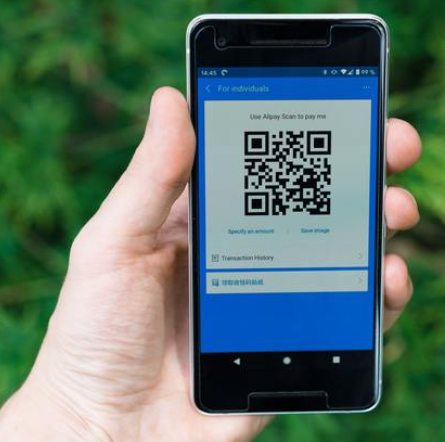
Digital payments have now gained wide currency. From being the preserve of stores and supermarkets, it has now trickled down right up to street vendors. Be it a vegetable seller, flower seller, tender coconut seller, or milk seller, a laminated QR code holds a pride of place in their pushcarts. For them, it has become an aspirational prop to do business in the world’s second-largest smartphone market.

The QR code has taken forward from what swipe machines had done to popularize the use of debit cards and credit cards as cashless alternatives. They have made cashless transactions much more inclusive, as unlike swipe machines they don’t need costly trappings such as electricity, broadband connectivity or hassles like waiting for one-time passwords.

For buyers also there is no need to establish your creditworthiness to credit card firms, nor pay joining fees. All that was required was a bank account, a smartphone to download a payment app to scan those QR codes.

This two-dimensional pattern of square black and white dots has changed the way we pay the vendors, cabbies and auto drivers, hairdressers and even altered the way we lend or borrow money among friends. It has also become an ice-breaker when loose change is not around.

Japanese engineer Hara Masahiro has been credited with inventing the QR code more than 25 years ago. He claims he got the ‘eureka moment’ while playing the popular Japanese board game ‘Go on’ during a lunch break. While arranging the black and white pieces on the grid, he felt it could be used as a way to convey information.

His company Denso was receptive to his idea and deployed a team to develop the codes as we see them today. A QR code is now seen as a major enhancement over the conventional barcodes, as they can embed much more information than those bunch of vertical lines with varying widths and spacing.

In India, QR codes started gaining visibility barely 5-6 years ago and were considered synonymous with Paytm. Though this digital payment firm has been in existence since 2010, it saw a rapid rise in its user base when the Indian government banned high-value currency notes in November 2016. As cash became scarce, people began scurrying for cashless alternatives and there was a heavy rush to download Paytm from Google Playstore.

Paytm enjoyed this first-mover advantage for a while, but its dominance soon came under threat with the implementation of Unified Payments Interface, an instant real-time payment system developed by the National Payments Corporation of India to facilitate inter-bank transactions. Paytm’s transfer mode involved multiple legs, including the transfer of money from a bank account to the wallet and then to the beneficiary. 

The entry of Google Pay in 2018 and the takeover of Flipkart and its digital wallet arm PhonePe by Walmart in the same year, and their usage of the UPI platform, turned the heat on Paytm. It was forced to play catch-up by logging on to UPI, but it was too late.

Google Pay initially gained an unassailable lead in digital payments, but PhonePe soon began making rapid strides, and around December last year it even upstaged the former to become the top digital payments platform.

Covid-19 pandemic and the lockdowns made digital payments a necessity as cash was seen as a possible purveyor of the invisible virus, which had wreaked havoc across the country in three waves. Digital modes of payment were seen as a safer alternative, both by the customers and vendors. The laminated square black and white dots of QR codes became a great enabler in keeping the virus at bay.

Also Read: Bangalore Short Takes


Friday, 27 August 2021

A Picture Worth 1000 Words


This could well be one of those epoch-making images that history throws up once in a while, especially during crisis situations such as war, calamities, or rebellions. These images stand out from the routine ones churned out by photojournalists and others to describe the situation of that time.

They capture the joy, pain, hope, and despair of the people who are caught in that particular crisis. They stand the test of time and have a better recall value than others.

This image released by the US air force is part of a video that shows Afghans swarming the Kabul airport tarmac as a Boeing C-17 Globemaster III tries to take off.

The Taliban’s capture of Kabul has evoked despair among the populace as the horrors of their earlier rule two decades ago is still fresh in their minds. Hence they desperately want to get out of the country whatever it takes. This particular image vividly captures that desperation.

As the US air force aircraft rolled down the tarmac of the Hamid Karzai International Airport, hundreds of people ran alongside the plane while some even gained a foothold on its undercarriage. It almost resembled the people clinging on to the windows and roofs of a suburban train in Mumbai - but in this case, death was a certainty.

US air force officials later said the crew decided to “depart the airfield as quickly as possible” that day because of the deteriorating security situation. Crushed human remains were found inside the wheel well after the transport plane landed in Qatar. Media reports later said almost all of them fell to their deaths in and around Kabul city. 

This image is in league with that of the anonymous ‘tank man’ who stands defiantly as armoured carriers rolled into Beijing before the Tiananmen Square massacre of agitating students in 1989.


Or the image of a young Vietnamese girl running down a road naked along with others following a napalm attack during the infamous Vietnam war. Or moving further down the history, the photo of a US sailor kissing a woman in a nurse’s uniform in Times Square on Aug. 14, 1945. The picture evoked relief and euphoria marking the end of the horrific World War II.


These photos were captured on the spur of the moment, like any other image, by nimble-fingered photographers, but they soon developed a life of their own and the rest is history.

Also Read: Bangalore Short Takes


Sunday, 2 May 2021

Pandemic Shadow Over Twitter


Logging on to Twitter is like a Faustian bargain with time. You hope you can 'timebox' your Twitter time, but nine out of ten times this micro blogging site gnaws into your daily schedule. The tasks listed in the to-do list either are scratched off for another day or done well behind the schedule and in a hurried manner.

However, these days scrolling Twitter posts is heart-wrenching. Newspapers and other publications provide an occasional quote and statistics related to the havoc caused by the second wave of Covid-19. But Twitter on the other hand provides the human side of the tragedy that is unfolding in our homes, neighbourhoods, hospitals, crematoria and burial grounds, and often narrated in first person. Those tiny 280-character long posts, sometimes with a photo or video, provide us a glimpse of the scale of tragedy that has befallen our country.

Though the second wave is barely few weeks old, it has dwarfed the first one with a manifold rise in the number of daily new cases and fatalities. It made its presence felt around Feb 15 and took off after March 10. The second wave pandemic graph now loosely resembles a pencil-sketch outline of Dubai's Burj Khalifa tower.

During the peak of the first wave last September, the number of new daily cases were less than one lakh and fatalities rarely crossed 1000. But this time the daily new cases are topping three lakhs and deaths exceed 2,000.

This is also getting reflected on Twitter, with almost every second member either infected or has some close relative battling the virus. The health infrastructure of almost every city is creaking under the heavy influx of patients with the deadly British variant and the triple mutant viruses wreaking havoc across the country.

The Twitter posts can be broadly divided into two categories. Firstly, conscientious members admitting that they have tested positive for the virus and requesting all those who came in contact with them to get tested. Or their spouses and relatives have tested positive and they have gone into self-isolation. They range from random guys to influencers, journalists, stand-up comedians and others with thousands of followers.

The second category makes a much more disturbing reading. Members making fervent pleas for hospital beds, oxygen cylinders, drugs like remedesivir or tocilizumab and plasma for themselves or for their next of kin. In some cases, it is from families where all members have been infected and can't step out or for families that have already lost one member and another one is in serious condition. The requests are from everywhere - from cities such as Delhi and Mumbai to smaller towns like Faridabad, Patna, Bhopal or Kanpur.

These messages follow a similar template: It provides details regarding patient's name, age, oxygen level, contact number, hospital and often end with a 'please retweet and amplify' plea. The sheer volume of such posts points to the extent to which our health infrastructure has been overwhelmed.

A few posts do appear of members profusely thanking Good Samaritans and NGOs for timely help in getting a hospital admission or oxygen cylinders. Some volunteers also post 'This is sorted. Hence deleting the tweet' after successfully providing relief to the Covid-19 infected.

But for every such tweet there were numerous others which did not have such happy endings. In some cases, the members tweet that they no longer need any leads on beds or cylinders as their kin passed away. So, it is not exactly the virus, but failure to get oxygen or timely medical help that proved fatal.

The virus has decimated many families, with some losing their aged parents in a matter of few days, or even worse minors becoming orphans. While for others ‘normalcy’ may return after the current Covid-19 wave ebbs in a few months, but for these families the scars will remain for long.

The mounting death toll, officially above 200,000 after the pandemic started last year, is making crematoriums and grave yards work overtime and it is extracting a heavy toll on the grave diggers and crematorium workers. They are also exposed to a greater risk of contracting the virus. There is also a shortage of firewood in many places and some graveyards don’t have any space left to bury the bodies.

For the bereaved families, the duration between death and last rites is getting longer as body bags line up at cremation and burial grounds.

A positive fallout of the unfolding tragedy has been the rise of volunteerism and altruism on Twitter. Common folks are trying to help out each other. And it is no longer confined to supplying oxygen cylinders or medicines. Some are offering meals to Covid patients who are single and not in a position to cook. Others are offering free online consultations and counselling to Covid-affected families. There were also Tweets offering boarding facilities for pets of these families.

The downside is that several fraudsters are also around to make a quick buck from hapless patients. They promise oxygen cylinders, medicines at exorbitant rates and vanish once the advance payment is made. Quite often the drugs they supply is also spurious.

Though Bollywood and cricket stars are treated like Gods in this country, they were totally missing in action. They wield huge influence on Twitter with a large army of followers, but the silence of their handles has been deafening. Barring just one or two, nobody has spoken a word about the unfolding health crisis, probably the biggest since Independence.

In fact, some of the Bollywood stars were clicked by the paparazzi at the Mumbai airport leaving for safer environs of Dubai and Maldives to escape the pandemic. The cricket stars, until recently, were busy playing the Indian Premier League  and enjoying the best-in-class Covid-19 safety and treatment protocols. However, the wily virus has even breached those bio-bubbles and the tournament had to be put on hold. Even some of the retired stars, who still enjoy popularity, appear tone-deaf to the plight of their countrymen.

Lastly, one really wonders how the non-Twitter universe is coping with this calamity. Many reside in small towns and villages where the health infrastructure ranges from patchy to non-existent. For them it may be a much more uphill battle against the deadly pandemic, and their suffering rarely creates a blip in the Indian media's city-centric radars.

Also Read: Bangalore Short Takes